
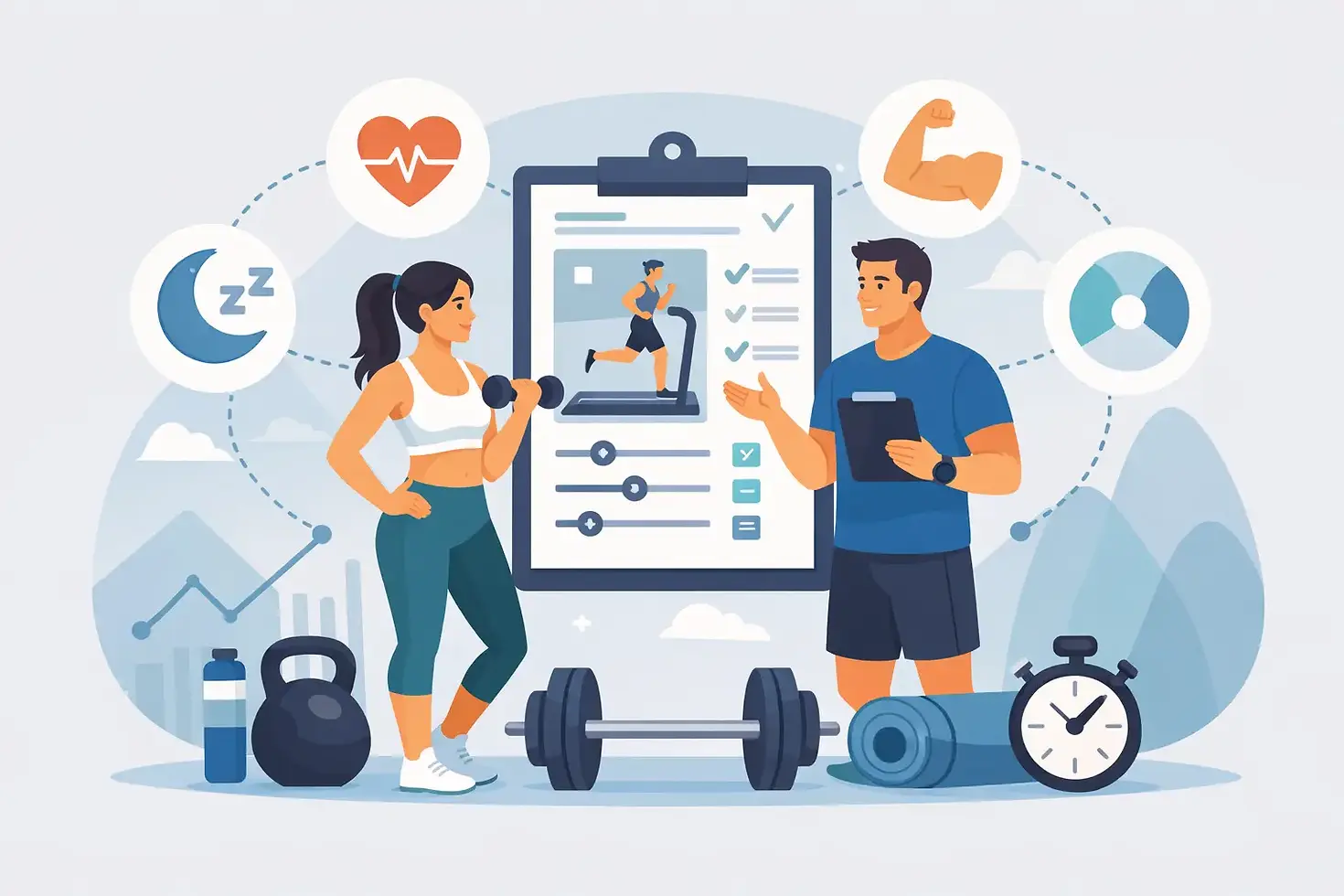
Why a Personalized Workout Routine Works
- adrianlatis
- May 25
- 6 min read
Most people do not fail because they lack motivation. They fail because they follow a plan that was never built for them in the first place. A personalized workout routine changes that. It gives your training structure, direction, and a clear reason behind every session, so your effort starts producing visible results instead of random fatigue.
That matters even more if you are balancing work, family, travel, and a full schedule in Zürich. When your time is limited, your training cannot be generic. It has to fit your body, your goal, your recovery capacity, and your reality. Otherwise, even hard work gets wasted.
What a personalized workout routine actually means
A personalized workout routine is not just a few exercises copied into an app with your name at the top. Real personalization starts with the outcome you want and works backwards. If your goal is fat loss, muscle building, better posture, more strength, or improved performance, the plan should reflect that from day one.
It also has to account for your current level. A beginner needs different volume, exercise selection, and coaching cues than someone who has trained consistently for three years. The same is true for someone returning after injury, someone preparing for a holiday, or someone trying to break through a plateau after months of stalled progress.
This is where many standard programmes fall apart. They assume everyone responds the same way to the same training split, the same intensity, and the same progression model. In practice, that is rarely true. Some people recover fast. Others need more rest. Some need to improve movement quality before increasing load. Others are ready to push hard immediately. A good plan respects those differences.
Why generic plans stop working
Generic programmes are popular because they are easy to sell and easy to follow for a week or two. But convenience is not the same as effectiveness. If a plan does not match your goal, your schedule, and your recovery ability, it creates friction. Friction leads to missed sessions. Missed sessions lead to inconsistent progress.
There is also the issue of exercise relevance. Someone trying to build stronger glutes, improve body composition, and feel confident in fitted clothes does not need the same training focus as someone preparing for a half marathon. A busy executive with three realistic training windows per week does not need a six-day bodybuilding split. A motivated beginner does not need advanced intensity techniques before learning how to move well under control.
The trade-off is simple. Broad plans can be useful for general activity, but they are weak when the goal is specific change. If you want measurable progress, your training needs more precision than a one-size-fits-all template can offer.
The biggest advantage: you stop guessing
Guesswork is exhausting. One week you train hard, the next week you switch methods because something on social media looked convincing. Nutrition becomes inconsistent, sessions become random, and progress becomes impossible to measure.
A personalized workout routine removes that noise. You know what you are doing, why you are doing it, and how to progress it over time. That creates confidence, and confidence improves consistency. When clients finally start following a plan that fits them, the first result is often not physical. It is mental clarity. They stop second-guessing every decision.
That clarity is one of the biggest reasons personalised coaching works so well for busy adults. You do not need more information. You need the right information applied in the right order.
How a personalized workout routine is built
A serious programme starts with assessment, not assumptions. That means looking at your current body composition, training history, movement quality, injury background, daily routine, stress level, and short-term and long-term goals. If any of those are ignored, the plan is incomplete.
From there, the structure becomes more strategic. Training frequency is chosen based on what you can realistically sustain. Exercise selection is based on what gives you the best return, not what looks impressive. Volume and intensity are adjusted to create progress without pushing you into burnout. Recovery is treated as part of the plan, not an afterthought.
A well-designed routine also includes progression. That can mean increasing load, improving reps, refining technique, reducing rest, or improving control through a full range of motion. Progress is not always about lifting heavier every week. Sometimes the smartest move is improving execution before increasing demand.
This is especially important for clients chasing physique change. Better body composition is rarely the result of random hard sessions. It comes from repeatable training, correct exercise execution, and enough consistency over time to let the process work.
Why your goal should shape your plan
Not all training goals can be prioritised equally at the same time. That is where honest coaching matters. If you want maximal muscle gain, aggressive fat loss, peak endurance, and pain-free movement all at once, something has to lead and something has to support.
A personalized workout routine helps establish that priority. If your main goal is fat loss, the plan should preserve muscle while increasing energy expenditure and supporting recovery. If the goal is muscle building, the structure should prioritise hypertrophy, enough training volume, and nutrition that supports growth. If your aim is performance, training should become more specific to the movements and outputs that matter.
This is not about limitation. It is about focus. Focus gets results faster because your effort stops being diluted.
The role of accountability in personalised training
Even the best plan fails if it sits unused. That is why accountability is not a bonus. It is part of the result.
Most adults already know they should train consistently, eat better, and recover properly. The problem is not awareness. The problem is execution under real-life pressure. Work runs late. Energy drops. Motivation fluctuates. Without structure and someone holding the standard, people slide back into old habits.
Personalised coaching creates a different environment. There is a plan, but there is also oversight. Sessions are adjusted when needed. Plateaus are analysed instead of ignored. Standards stay high, even when life gets busy. That combination of personal strategy and direct accountability is where real momentum starts.
For many people, this is the difference between trying and transforming.
When a personalized workout routine needs to change
A good plan is not fixed forever. It evolves as your body, performance, and lifestyle change. If you get stronger, leaner, fitter, or more technically skilled, your training should reflect that. If your work schedule shifts or recovery drops, the plan may need to be adapted to keep progress moving.
This is where experience matters. Changing a programme too often creates chaos. Never changing it creates stagnation. The right adjustment happens when data shows it is needed, not when boredom appears after ten days.
That balance is one reason experienced coaching produces better outcomes than self-programming for many clients. It is easier to stay objective when someone else is looking at your progress with a trained eye.
What to expect from the right coaching approach
If you are serious about changing your physique or performance, you should expect more than motivation and a hard session. You should expect a method. Your training should feel demanding, but it should also feel targeted. You should know what you are working toward and how each phase supports the outcome.
That is the standard at Fit by Adrian. The process is not built around generic workouts or guesswork. It is built around individual assessment, direct coaching, and a structured plan that pushes you towards measurable change.
That does not mean every week feels easy. It means every week has purpose. Some phases require more intensity. Others require more patience. The right plan respects both.
The real value is not just the workout
The strongest benefit of a personalized workout routine is not that it makes training more interesting. It makes training more effective. It gives your effort direction and turns discipline into progress you can actually see.
When your programme fits your body, your goal, and your life, consistency becomes more realistic. And when consistency improves, everything else starts to move with it - strength, confidence, body composition, and performance.
If you are tired of training hard without a clear return, that is usually not a sign to do more. It is a sign to train with a plan that is finally built for you.


Comments